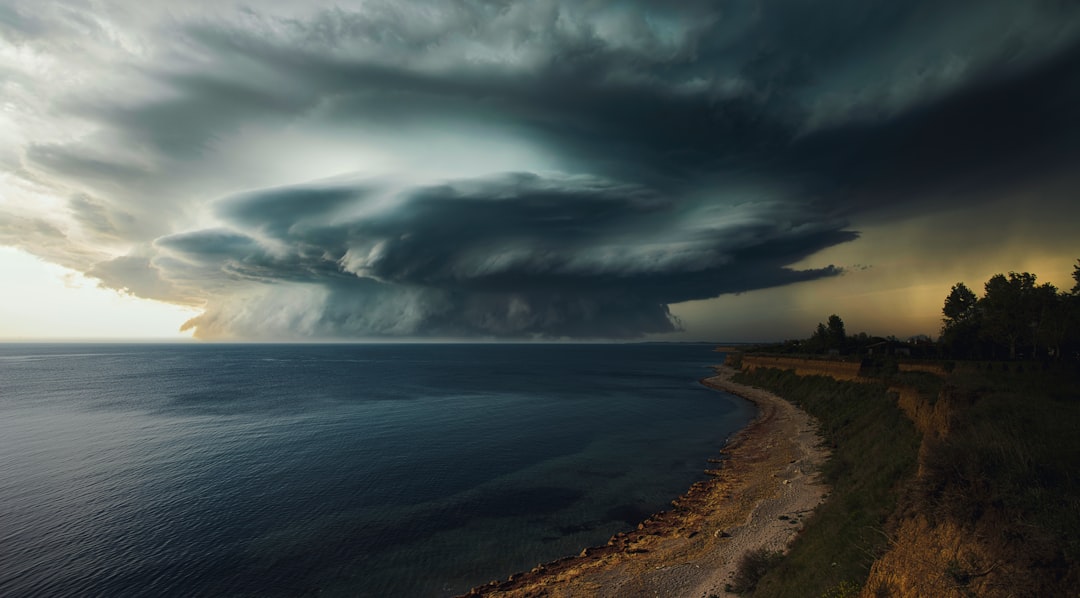
Babcock Ranch is the kind of project that invites skepticism. A master-planned community in Charlotte County, Florida — about 12 miles northeast of Cape Coral — built from the ground up around the premise that it could withstand hurricane-force winds, generate its own solar power, and function as a self-contained town. That premise has been tested twice in serious ways: Hurricane Ian in September 2022 and Hurricane Milton in October 2024. Both times, the community came through with minimal structural damage while surrounding areas faced catastrophic losses.
That track record is changing the conversation among Florida buyers. The question is no longer whether climate-resilient design is possible at the community scale. It’s whether the model is financially sustainable, broadly replicable, and worth what buyers are being asked to pay.
What “Hurricane Resistant” Actually Means at Babcock Ranch
The term gets used loosely in Florida real estate marketing, so it’s worth being specific about what Babcock Ranch has actually built.
Underground Infrastructure
Every utility line in Babcock Ranch — power, internet, telecommunications — runs underground. This is the single design decision that most directly explains why the community kept its lights on during Ian, while nearly 2.7 million Florida customers lost power across Lee and Charlotte counties. Above-ground power lines are the most common casualty in any major storm. Eliminating them removes the most predictable failure point.
Building Code Standards
Homes are constructed to meet or exceed Florida’s post-2004 building codes, which require wind resistance rated to at least 150 mph in many coastal and near-coastal zones. Many Babcock Ranch builders have voluntarily gone beyond the minimum — using impact-rated windows and doors, reinforced roof systems, and elevated foundations in flood-prone lots. The community sits well inland at elevation, which limits storm surge exposure compared to barrier island or beachfront properties.
On-Site Solar Generation
The community is powered by a 150-megawatt solar array — one of the largest in the US connected to a single community. Paired with battery storage, this system kept the community operational during Ian, even as grid power failed across the surrounding region. Residents reported functioning traffic lights, operational stores, and open community facilities while neighboring towns were in darkness.
That kind of energy independence has real dollar implications. As electric bills across Florida continue climbing — a trend that’s affecting buyers from Pensacola to Miami — the ability to hedge against grid volatility becomes a practical financial consideration, not just an environmental selling point. As electric bills soar across Florida, communities with distributed solar generation are drawing serious buyer attention.
The Insurance Angle — and Why It Matters More Than You Think
Florida’s property insurance market remains one of the most stressed in the country. As of recent market data, average annual homeowners insurance premiums in Florida have been running between $4,000 and $6,000 for a typical single-family home — well above the national average — with coastal properties often carrying substantially higher premiums. Some policies have simply been cancelled outright as carriers exit the state.
Babcock Ranch buyers have reported meaningfully lower premiums than comparable homes in coastal markets, reflecting the community’s inland location, elevated construction standards, and documented storm performance. That premium differential can range from several hundred to over a thousand dollars annually, depending on the insurer and specific home. Over a 10- or 20-year ownership horizon, that gap is material.
The insurance calculus matters in another way. Lenders are beginning to scrutinize properties in high-risk flood and wind zones more carefully. Buyers financing a Babcock Ranch home face fewer of the underwriting complications that have become increasingly common in coastal markets — an advantage that’s easy to underestimate until you’re sitting across from a loan officer who’s flagging a property’s zone designation.
What Buyers Are Actually Paying
Babcock Ranch is not a discount product. Home prices, as of recent market data, have ranged from approximately the mid-$300,000s for townhomes to over $1 million for larger estate homes, with the bulk of single-family inventory in the $450,000–$700,000 range. HOA fees — which cover the community’s extensive amenities, trail systems, and shared infrastructure — typically run $200–$400 per month depending on the neighborhood section.
That cost structure compares reasonably well against other new construction in the region, but it does reflect a premium over comparable square footage in older, non-master-planned Charlotte County neighborhoods. Buyers are paying for infrastructure that most Florida communities don’t have — and in a market where wetland development has already cost Florida homeowners $1.6 billion in flood damages, the engineering built into Babcock Ranch starts to look like insurance in itself.
The Broader Implications for Florida’s Housing Market
Babcock Ranch represents something unusual in Florida development: a long-term bet that climate-forward design is a market differentiator, not a burden. The fact that the community sold through the pandemic boom, retained value post-Ian, and continued expanding with multiple builders now active on site suggests that bet is paying off — at least at this price point.
The model is drawing attention from developers and planners elsewhere in Florida. But replication isn’t straightforward. Babcock Ranch benefits from a specific set of conditions: state land purchases dating back decades that created a large contiguous parcel, early infrastructure investment by Kitson & Partners, and an inland location that limits the flood-zone exposure that makes coastal building so expensive to insure and engineer.
Not every Florida community can absorb those upfront costs. And as the new Atlantic hurricane forecast signals an intensifying peak season, communities that haven’t made comparable investments are going to face harder conversations about insurability, resale value, and long-term demand.
What to Do Before You Buy
If Babcock Ranch — or a similarly positioned resilient community — is on your shortlist, here’s what to confirm before committing:
- Request the specific wind rating and flood zone designation for the lot, not just the community average.
- Get insurance quotes before going under contract. The premium advantage is real, but it varies by carrier, policy structure, and home characteristics.
- Review the HOA financials closely. Shared infrastructure at this scale requires well-funded reserves. Ask for the most recent reserve study and operating budget.
- Understand the solar arrangement. Power generation at Babcock Ranch flows through a partnership with FPL. Ask specifically how battery storage backup works for individual homes during extended outages.
- Compare days on market for resale homes within the community — this tells you whether demand is holding, softening, or accelerating as more inventory comes online from new construction.
The fundamentals here are strong. But buying into any master-planned community requires scrutiny of the financial structure holding it together — not just the engineering keeping it dry.