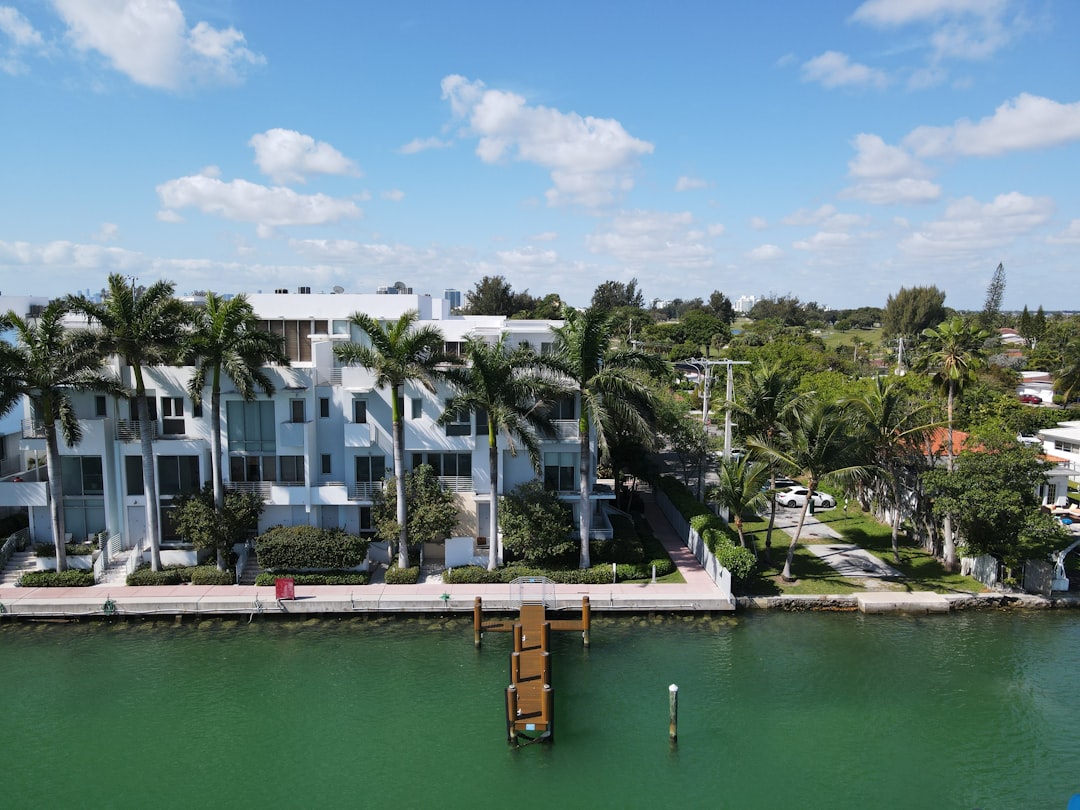
Florida’s real estate market has produced no shortage of dramatic standoffs, but few capture the tension between private property rights and development pressure quite like the “holdout house” phenomenon. These are the properties whose owners refuse to sell while everything around them gets bulldozed, rezoned, or rebuilt into something unrecognizable. And in Florida — where development pressure is intense, land is finite in key corridors, and property rights carry real legal weight — the stakes in these standoffs are unusually high.
The question isn’t just what happens to the house. It’s what the outcome signals for every homeowner sitting on land a developer wants.
What Is a Holdout House, and Why Does Florida Produce So Many of Them?
A holdout property is one whose owner refuses to sell during a larger land acquisition — typically when a developer or public agency is assembling parcels to clear the way for a major project. The owner’s legal right to stay is usually unambiguous. The practical situation is something else entirely.
Florida’s combination of in-migration pressure, constrained coastal geography, and booming urban cores makes it fertile ground for these situations. Markets like Miami, Tampa, and Orlando have seen developers pay premium after premium to assemble contiguous land, only to find one parcel whose owner won’t negotiate at any price. That single parcel can halt a $200 million project, reshape a site plan entirely, or trigger years of litigation.
The reasons owners hold out vary considerably:
- Sentimental attachment — a family home on land held for generations
- Strategic negotiation — waiting for the developer’s desperation to drive up the offer
- Genuine disagreement — the owner believes the development will harm the surrounding community
- Legal disputes — contested title, inheritance complications, or unresolved liens that make selling difficult regardless of intent
Each situation plays out differently, and the resolution depends heavily on whether public infrastructure or purely private development is involved.
The Eminent Domain Question
When a government entity — a municipality, county, or state agency — is the acquiring party, Florida law allows for eminent domain: the compulsory purchase of private property for public use, with “just compensation” paid to the owner. The process is defined under Florida Statutes Chapter 73 and Chapter 74, and while owners can and do challenge both the necessity of the taking and the offered compensation, the government’s ultimate authority to acquire the land is rarely in doubt.
Private developers have no such power. They must negotiate, wait, or redesign.
That distinction matters enormously. A private developer assembling land for a mixed-use tower in Brickell or a master-planned community in a suburban corridor has zero legal authority to compel a sale. The holdout owner can, in theory, stay indefinitely — even as construction surrounds the property on three sides and the developer absorbs carrying costs on adjacent parcels.
In practice, many of these standoffs do eventually resolve through negotiation, often at prices that far exceed what adjacent parcels sold for. Developers building that kind of premium into their pro formas is one reason why Florida construction projects frequently see cost escalation that surprises outside investors.
This dynamic isn’t limited to private towers. As this site has covered, Florida homeowners are already pushing back against development encroachments — and the legal and emotional weight behind those positions is real.
What Usually Happens Next
There is no single playbook, but holdout situations in Florida tend to resolve through one of several paths:
- The buyout at a significant premium — The developer eventually meets or exceeds the owner’s number. The sale closes, the project proceeds, and the delay gets absorbed into the timeline.
- Redesign around the parcel — Particularly for commercial or mixed-use projects, architects and engineers redesign the footprint to incorporate or work around the holdout. This rarely produces an optimal site plan but can salvage the project.
- The project collapses or relocates — If the holdout parcel is too central to the site plan to work around, some developments simply don’t happen. The developer moves to a different site, and the holdout owner retains the property.
- Legal challenges over easements or access — In some cases, developers attempt to limit or contest access to the holdout property — a legally fraught strategy that tends to generate expensive litigation rather than quick resolution.
- Long-term standoff — Some holdout situations last years or even decades. The owner ages in place while development surrounds them, and the property eventually changes hands through inheritance or estate sale.
The Role of Community Sentiment
Public opinion matters here more than most people assume. When the holdout owner is a longtime resident — particularly an elderly homeowner in a neighborhood undergoing rapid gentrification — local media attention often shifts community and sometimes municipal support toward the owner. That pressure can complicate a developer’s permitting process, even when the holdout parcel itself isn’t part of any application.
Conversely, when a holdout situation involves a property in obvious disrepair or one perceived as blocking civic infrastructure — a road widening, a transit expansion, a public park — community sentiment frequently runs against the owner.
Florida-Specific Factors That Complicate Resolution
Several elements of Florida’s regulatory and physical environment make holdout situations particularly complex here compared to other states.
Flood zone designation is a meaningful one. If a holdout property sits within a FEMA-designated Special Flood Hazard Area, the owner may face escalating insurance costs that make staying financially painful over time — even if the development pressure around them doesn’t compel a sale. As wetland development has already cost Florida homeowners significant flood damages, properties in marginal flood zones are under compound financial pressure.
HOA and condo association dynamics create a different variant of the holdout problem in multi-unit settings. When a condominium association needs a supermajority or unanimous consent to approve a bulk sale or termination, a single unit owner can block a transaction affecting hundreds of neighbors. Post-Surfside reforms have added new complexity to these decisions, particularly for aging buildings facing significant structural remediation costs.
Hurricane exposure plays a longer game. A holdout owner in a coastal area who has lived through multiple major storm seasons understands, viscerally, what that exposure means. Some hold out because they genuinely value the property; others hold out because they want a price that reflects not just current market value but the cost of rebuilding their life somewhere else.
What This Means for Buyers and Sellers Watching From the Sidelines
If you own property adjacent to or within a larger acquisition zone, the holdout dynamic is directly relevant to your position. A neighboring holdout can delay your own transaction, affect the appraised value of your parcel, or change the character of the development that eventually surrounds you.
Sellers in active acquisition corridors should, at minimum, understand:
- Whether the acquiring party is a government entity (with eminent domain authority) or a private developer (without it)
- What the assembled parcels around yours have sold for, and whether those comps reflect holdout premiums
- How long the developer’s option periods or financing windows run — a developer under time pressure is a motivated buyer
Buyers purchasing near known development corridors should ask their agent and, where appropriate, their attorney, what acquisition activity is currently underway in the immediate area. A home that looks competitively priced today may be sitting in the path of a project that changes everything about the neighborhood within 24 months.
The Bigger Picture
Holdout situations are, at their core, a stress test of property rights. Florida’s legal framework generally protects those rights robustly — but the practical experience of living as a holdout, surrounded by construction, litigation, or community pressure, is rarely simple. Outcomes depend on the owner’s staying power, the developer’s financial position, and the specific legal constraints governing the acquisition.
The most practical step any property owner can take if they find themselves in this position: consult a Florida real estate attorney before entering any negotiation. The leverage a holdout owner holds is real, but it requires informed handling to convert into an outcome that actually reflects the property’s value.