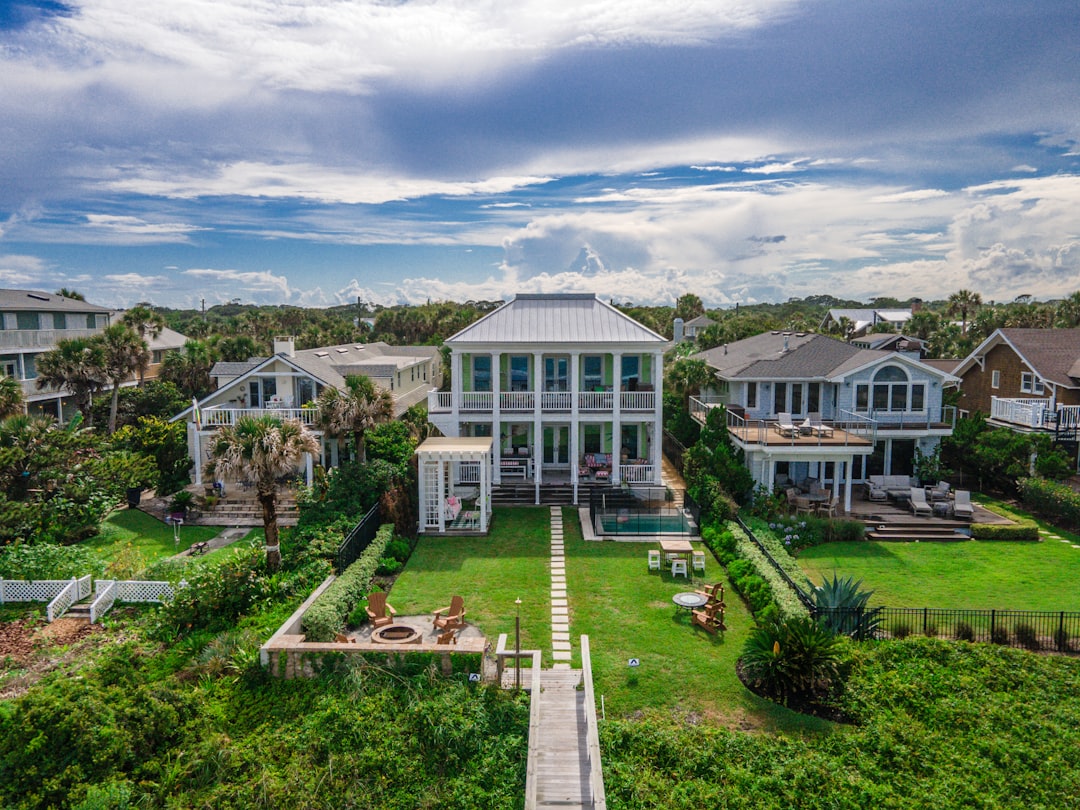
Nationally, starter home affordability is improving at a slightly faster pace than the overall housing market — and for first-time buyers who spent the past two years being priced out, that shift matters. It is not a full reversal of the affordability squeeze, but it is a measurable change in direction, and in a market like Florida, where entry-level inventory has been especially tight, even a modest improvement in conditions can open doors that were firmly closed in 2023 and 2024.
What the Data Is Actually Showing
As of recent market data, the share of income required to purchase a typical starter home has declined modestly relative to the peak of the affordability crisis. Nationally, wages have been growing at a rate that outpaces home price appreciation in the lower price tiers — a dynamic that has been more favorable for entry-level buyers than for move-up or luxury segments. Affordability is improving as wages outpace home price growth is a trend that’s showing up in multiple data sources, and the starter home segment is leading that improvement by a narrow but real margin.
Median monthly mortgage payments on starter homes have come down from their peak. In mid-2024, buyers at the lower end of the price spectrum were routinely absorbing payments that represented 35–40% of household income in high-cost metros. More recent figures suggest that ratio has narrowed by roughly 2–4 percentage points in markets where home price growth has stalled or reversed slightly.
That is a modest shift. It does not mean starter homes are affordable in any traditional sense. It means they are slightly less unaffordable than they were twelve months ago, and for buyers who have been saving and waiting, that gap matters.
What This Looks Like in Florida Specifically
Florida’s starter home picture is more complicated than the national average, for several reasons that buyers need to understand before they read a headline and assume the coast is clear.
Price Tier Gains Are Geographically Uneven
Markets like Tampa, Orlando, and Jacksonville have seen more movement in the sub-$300,000 price tier than South Florida, where the floor for entry-level product remains significantly higher. Miami is now more expensive than New York City, and that premium extends downward into the starter home segment. A buyer who can purchase a 3-bedroom starter home in the $275,000–$320,000 range in parts of Hillsborough County will face a fundamentally different market in Broward or Miami-Dade, where comparable product rarely lists below $400,000.
Inventory Has Grown, but Quality of That Inventory Varies
As of recent market data, active listings in Florida are up significantly year-over-year across most metro areas. That increase in inventory has been one of the primary drivers of the affordability improvement — more supply, slower price growth, more days on market, and in some submarkets, outright price reductions. Price cuts are creeping back up as the summer selling season stalls, and first-time buyers who can act with pre-approval in hand are in a stronger negotiating position than they would have been in 2021 or 2022.
A word of caution on that inventory, however. A meaningful portion of the added supply at the entry-level price point in Florida consists of older construction — homes built in the 1970s and 1980s that may carry deferred maintenance, outdated electrical panels, older roofs, and elevated insurance costs. Buyers who compare list prices without accounting for the true cost of ownership in Florida’s insurance environment will find their monthly payment projections off by a wide margin.
The Insurance Line Item Remains the Wild Card
For any first-time buyer in Florida, the purchase price is only part of the affordability equation. Property insurance premiums in coastal counties, and even many inland ones, continue to add $4,000–$8,000 or more per year to the cost of homeownership — costs that do not show up in the mortgage payment comparison that drives most affordability headlines. Flood zone designation adds another layer entirely. Buyers focused on the starter home tier need to request insurance quotes before going under contract, not after.
Practical Takeaways for First-Time Buyers Right Now
If you are a first-time buyer in Florida watching this market, here is what the current affordability improvement actually means for your strategy:
- Get pre-approved now, not later. The rate environment remains volatile, and mortgage rates hovering near 6.6% are not locked in for buyers who delay.
- Expand your geographic search. The affordability gains are most pronounced outside the high-demand coastal markets. Orlando suburbs, parts of Pasco County, and portions of the Treasure Coast offer meaningful value relative to Miami-Dade and Broward.
- Build insurance costs into your affordability ceiling. Before you set a target price, run an insurance estimate for any home you are seriously considering. It should be part of your maximum monthly payment calculation, not an afterthought.
- Use the inventory window strategically. Higher inventory levels mean sellers are more willing to negotiate on price, closing costs, and repairs. That leverage is real, but it tends to compress again when rates drop and buyers flood back in.
- Consider down payment assistance programs. Florida Housing Finance Corporation programs offer assistance to first-time buyers that can materially reduce upfront costs — and they are underutilized by buyers who assume they will not qualify.
The Broader Market Context
The national affordability improvement at the starter home tier reflects a combination of factors: modest wage growth, slightly slower home price appreciation at the lower end of the market, and in some areas, genuine supply additions from builders who have pivoted toward smaller, more attainable product. A builder in St. Pete recently pitched townhomes with buyer aid and free land as an explicit affordability play — the kind of incentive structure that tells you developers see first-time buyers as a viable buyer pool again.
Whether this trend continues depends heavily on what happens with mortgage rates over the next six months. If the Fed signals rate cuts and rates fall meaningfully below 6.5%, the improved affordability window narrows quickly as demand surges. Buyers who treat the current period as a strategic opportunity — not a permanent shift — will be better positioned than those waiting for conditions to improve further before acting.
The Bottom Line
Starter home affordability is improving, and Florida buyers in select markets have a genuine window to act. The improvement is incremental, not transformative, and it comes layered with Florida-specific costs that national headlines do not capture. The buyers who will benefit most are those who have done the full math — mortgage payment, insurance, taxes, and HOA where applicable — and are ready to move decisively when the right property comes to market.