Small flies hovering around a sink, shower, or floor drain are often called drain gnats. The name is useful for describing the problem, but it does not identify the insect. Drain flies are common around wet plumbing, while fungus gnats, fruit flies, and other small flies can appear in the same areas for different reasons.
The most effective approach starts with the source. If the insects are breeding inside a drain, removing the damp organic material that supports their immature stages matters more than simply killing the adults you can see. If they are coming from potting soil, food waste, or another damp area, treating the drain will miss the real problem.
Are Drain Gnats Actually Drain Flies?
Drain flies, sometimes called moth flies, are small flies associated with consistently damp places containing organic material. Their fuzzy bodies and wings can give them a tiny moth-like appearance, and adults often rest on walls close to the breeding area.
Fungus gnats tend to look slimmer, with longer legs and a more mosquito-like shape. Moist potting mix is a common source, although very wet organic debris elsewhere indoors can sometimes support them.
Fruit flies are more strongly associated with fermenting organic material. In a kitchen, that might include overripe produce, recycling, trash, residue around a garbage disposal, or another food source close to the sink.
Phorid flies are another possible look-alike. Because some species can develop in wet organic material associated with plumbing or sewage, persistent activity near drains deserves a closer look at the actual source rather than an assumption based on appearance alone.
The location and behavior of the flies usually provide better clues than size by itself.
| What you notice | More likely source | First place to inspect |
|---|---|---|
| Fuzzy, moth-like flies resting near a sink or shower | Drain flies | Wet drains, overflows, and other plumbing surfaces |
| Slender dark flies concentrated around houseplants | Fungus gnats | Damp potting mix and plant trays |
| Small flies gathering around produce or food waste | Fruit flies | Produce, trash, recycling, and disposal residue |
| Flies repeatedly emerging from one fixture | Drain-associated species | That fixture and nearby wet organic buildup |
If you cannot confidently identify the insect, focus first on where new flies are appearing. A confirmed breeding source is more useful than guessing from a quick glance.
Confirm Which Drain Is Producing Them
Flies resting beside a sink are not necessarily coming from that sink. Bathrooms and kitchens contain several damp areas within a short distance of one another, and adults can move away from their breeding site.
Watch the area when the room has been quiet. Check the sink, overflow opening, shower, bathtub, garbage disposal, floor drain, and any plumbing fixture that is used only occasionally.
Clear tape can help confirm a suspected drain. Place it across part of the opening with the sticky side facing the drain, but do not seal the opening completely. Flies caught as they emerge make that drain a stronger suspect.
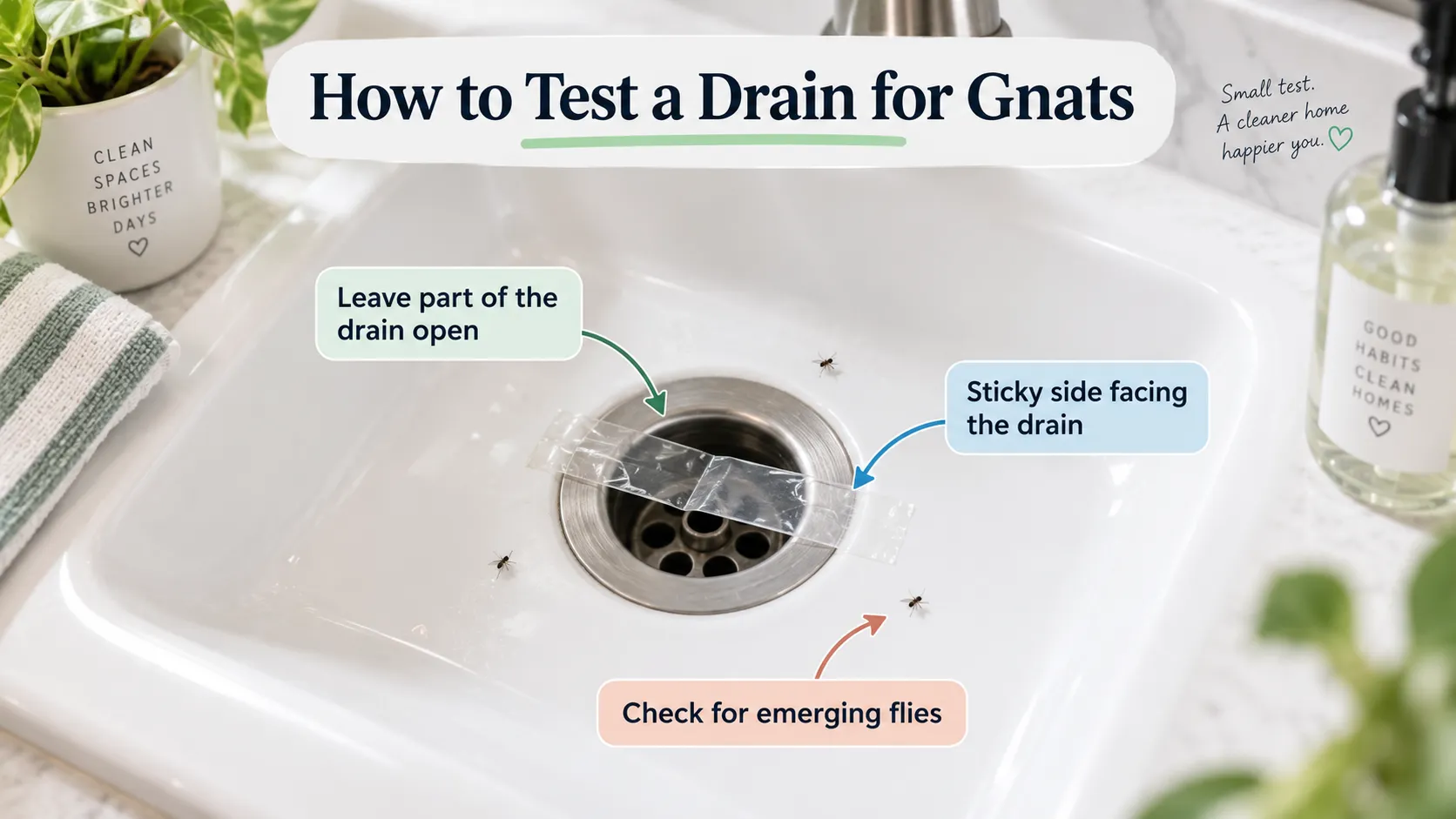
Test more than one fixture when necessary. A bathroom sink may look like the obvious source while the flies are actually developing in the shower or a floor drain. In the kitchen, the drain may be clean while a disposal, recycling bin, forgotten produce, or damp cleaning item is producing the insects.
Accessible dark or slippery buildup inside a drain is another reason to investigate further. Drain-fly larvae develop in wet organic material on plumbing surfaces, so the condition of those surfaces matters more than whether water still flows normally.
If the drain test does not support your original suspicion, stop treating it and look elsewhere. Houseplants, trash, food residue, mop buckets, recycling, and hidden moisture can all lead you in a different direction.
How to Get Rid of Drain Gnats at the Source
Once you have evidence that a drain is the breeding site, remove the material the larvae are using rather than concentrating only on adult flies.
A practical cleaning sequence is:
-
Remove accessible debris. Take out hair, food particles, soap residue, and other material trapped around the stopper, strainer, or drain opening.
-
Scrub reachable plumbing surfaces. A suitable drain brush can physically remove the wet organic film attached to the inside of the drain. Focus on surfaces rather than simply pouring liquid through the center of the pipe.
-
Clean removable parts. Stoppers, strainers, overflow components, and other accessible pieces can hold residue even when the visible drain opening looks clean.
-
Flush away loosened material. Use a method that is appropriate for the fixture and compatible with anything already used in the drain. Do not combine household cleaning chemicals.
-
Monitor for new emergence. Adult flies already present in the room may remain for several days after cleaning. Look for a decline in new flies coming from the drain rather than expecting every adult to disappear immediately.
A garbage disposal requires extra caution. Follow the manufacturer’s cleaning instructions, disconnect power before cleaning removable components, and never place your hand inside the disposal.
Physical scrubbing is useful when the affected surface can be reached, but it is not the only possible treatment. A biological or enzymatic drain cleaner may help remove organic buildup and can be an alternative when brushing a section is impractical. Follow the product label and make sure it is suitable for the plumbing system.
Floor drains and rarely used fixtures should not be overlooked. A drain does not need to be used every day to remain damp enough for organic material to accumulate.
Why Bleach and Fly Traps May Not Solve the Problem
Many searches for drain gnats lead quickly to bleach, vinegar, boiling water, sprays, or homemade traps. These approaches do not all address the breeding material inside the drain.
A trap can reduce the number of adults in the room and help show whether activity is declining. It does not clean the surface where larvae are developing.
Bleach should not be treated as a substitute for locating and removing organic buildup. Even when a chemical contacts part of a drain, attached material elsewhere in the plumbing may remain.
More importantly, never mix bleach with other household cleaners. Combining bleach with incompatible products, including acids or ammonia-containing cleaners, can produce dangerous gases. If a chemical cleaner has already been used, do not immediately add another product unless its instructions specifically say the combination is safe.
Advice about hot or boiling water varies. Some guidance treats hot water as a possible supplemental flush, while other sources do not consider it an effective stand-alone control method. Either way, sending water through a drain is not the same as removing the material attached to its surfaces.
Adult insect sprays have a similar limitation. They may kill visible flies without changing the conditions inside the drain that allowed the next generation to develop.
Why Drain Gnats Keep Coming Back
Recurring activity often means there is still a breeding site somewhere, but that does not automatically mean the original drain was cleaned incorrectly.
Start by checking for a second source. Multiple drains can support flies at the same time, especially in bathrooms, utility areas, basements, and kitchens with several wet fixtures.
A disposal or overflow opening may also hold residue that was missed during the first cleaning. The visible drain opening can look clean while another damp surface remains coated with organic material.
When flies persist, investigate these possibilities:
- another nearby drain is active;
- an overflow or disposal still contains residue;
- a rarely used fixture has accumulated wet organic material;
- a hidden leak is keeping an area damp;
- the insects are coming from plants, food waste, or another non-drain source;
- the breeding area is inside plumbing that cannot be reached safely.
The insect’s location can help narrow the list. Slender flies concentrated around potting soil suggest a different problem from fuzzy flies repeatedly emerging from the same shower drain.
Persistent phorid-fly activity can also justify looking more carefully for an inaccessible plumbing or sewage-related source. The presence of small flies does not prove that a pipe is leaking, but continued activity after obvious breeding areas have been cleaned is a reason to investigate concealed moisture.
If you suspect a leak or a breeding area inside plumbing that cannot be safely accessed, a plumber or pest-control professional may be more useful than repeating stronger chemical treatments.
How to Keep Drain Gnats From Returning
Prevention is mainly about keeping damp plumbing surfaces from accumulating the organic material these flies can use.
Pay attention to the parts of a fixture that trap debris. Hair catchers, strainers, stoppers, overflow openings, disposal components, and drain walls can remain dirty even when the sink basin looks clean.
Routine maintenance does not need to mean pouring chemicals down every drain. Removing trapped material and cleaning accessible surfaces before thick buildup develops addresses the condition that matters.
Also keep an eye on fixtures that receive little attention. Guest bathrooms, basement floor drains, utility sinks, and other rarely used plumbing can develop problems without being noticed immediately.
Useful habits include:
- remove trapped hair and food debris before heavy buildup forms;
- clean accessible drain components instead of relying only on liquid products;
- investigate leaks and areas that remain persistently damp;
- keep food waste, recycling, and wet cleaning materials from becoming competing fly sources;
- watch previously affected drains for renewed emergence.
If small flies return, repeat the diagnostic process before repeating the treatment. Confirming where they are coming from is usually faster than treating every nearby drain.
Know When the Drain Is Not the Problem
When cleaning a confirmed breeding drain is followed by steadily declining activity, continue normal maintenance and monitor the area. A few remaining adults do not necessarily mean the treatment failed.
If new flies continue appearing without evidence that they are emerging from the drain, reconsider the diagnosis. Check neighboring fixtures, houseplants, food and waste sources, hidden moisture, and plumbing problems rather than repeatedly adding products to the same pipe.
The goal is not to find the strongest drain treatment. It is to locate the place where the insects are developing and remove the condition that allows them to keep reproducing.
FAQ
Are drain gnats the same as drain flies?
Not always. “Drain gnats” is a common name people use for tiny flies found around sinks and drains. The insects may actually be drain flies, fungus gnats, fruit flies, phorid flies, or another small species. Where they are breeding is usually more useful than their size alone.
Can drain gnats come from a clean-looking drain?
Yes. The visible opening may look clean while organic residue remains farther inside the drain, around an overflow, beneath a stopper, or on other damp plumbing surfaces. Check the areas where moisture and debris can collect.
Will bleach get rid of drain gnats?
Bleach should not be relied on as the main solution because it does not necessarily remove the organic buildup where drain-fly larvae develop. Never mix bleach with other household cleaners, including products containing acids or ammonia.
Why do drain gnats keep coming back after cleaning?
The original drain may not be the only breeding site. Check nearby drains, overflow openings, garbage disposals, rarely used fixtures, leaks, houseplants, food waste, and other persistently damp areas before repeating the same treatment.
When should I call a plumber or pest-control professional?
Professional help is reasonable when flies continue appearing after accessible breeding areas have been cleaned, when you suspect a hidden leak or inaccessible plumbing source, or when you cannot determine where the insects are coming from.