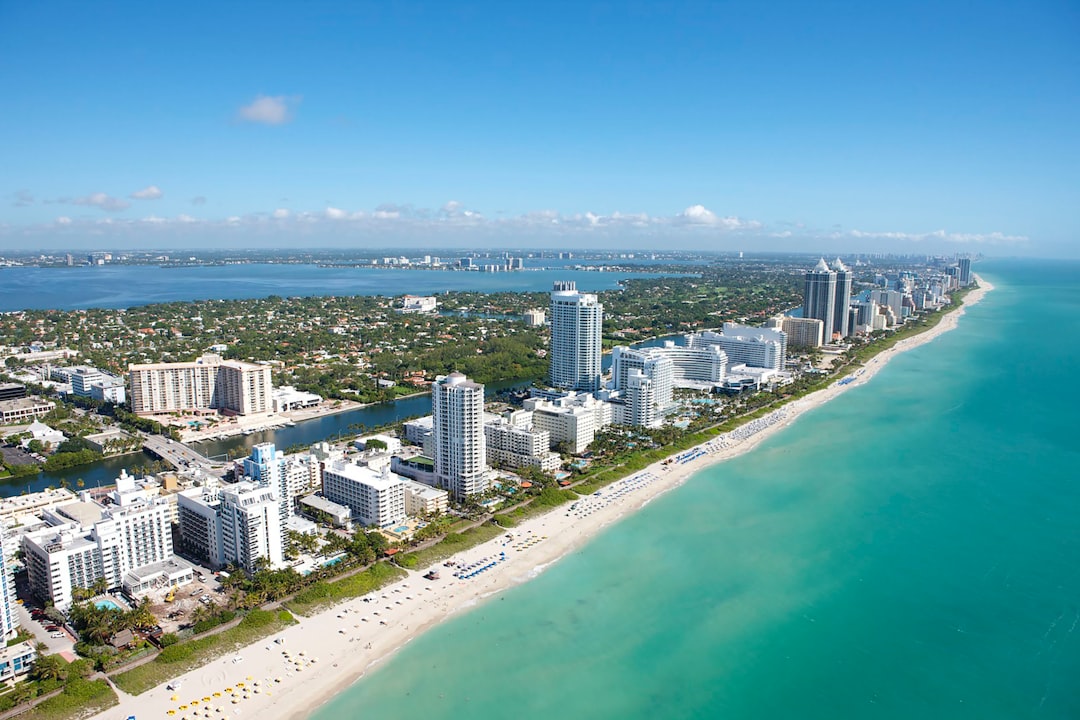
AvalonBay Communities acquiring an entire city block in South Miami is not a routine transaction. When one of the largest publicly traded apartment REITs in the country commits that kind of capital to a specific submarket, it tells you something about where institutional money expects rental demand — and rental rates — to go. For renters, the implications run in one direction. For investors watching South Florida’s multifamily sector, the signal is worth reading carefully.
What the AvalonBay Acquisition Actually Means
AvalonBay operates over 90,000 apartment homes across the country, and the company has a consistent track record of targeting high-barrier-to-entry markets — places where land is expensive, permitting is slow, and competition from new supply is structurally limited. South Miami fits that profile precisely.
The South Miami submarket sits at the intersection of several demand drivers: proximity to the University of Miami, the Coral Gables employment corridor, and the broader Miami metro’s sustained in-migration from higher-cost states. As of recent market data, Miami-Dade County’s apartment vacancy rate has been running below 5%, well beneath the national average of approximately 6.5–7%. When an institutional buyer like AvalonBay commits to a full city-block footprint, they are betting that that vacancy rate holds — or tightens further — over the next development cycle.
For context, AvalonBay’s developments in comparable Florida submarkets typically deliver Class A units in the $2,400–$3,800 per month range depending on unit size and amenity package. South Miami, given its land costs and positioning, is unlikely to price below that range.
What This Means for Renters in the Area
The short-term and long-term effects for renters diverge significantly.
In the near term, large-scale institutional development can actually add pressure to surrounding rents. When a developer of AvalonBay’s scale enters a submarket, it signals to other landlords — including smaller multifamily operators and condo investors renting individual units — that the area can support higher price points. Landlords raise asking rents accordingly, sometimes before new supply even breaks ground.
Longer term, the calculus shifts. New Class A supply, once delivered, does absorb some of the highest-income renter demand, which can relieve pressure at the top of the market. The issue in South Florida is that supply delivery timelines are long. Permitting, construction costs, and labor availability in Miami-Dade have consistently pushed project timelines to three to four years from site acquisition to first occupancy. Renters should not expect near-term relief from a transaction announced today.
Three practical realities renters in South Miami and adjacent neighborhoods should factor in:
- Rent escalations in the immediate area are likely before the new project delivers, as the AvalonBay purchase validates the submarket’s pricing ceiling for competing landlords.
- Existing tenants with leases expiring in the next 12–18 months should negotiate renewals early, before the surrounding market adjusts upward.
- Workforce housing alternatives in less-proximate corridors — Kendall, Westchester, or parts of Hialeah — may offer more stability for renters not tied to the immediate South Miami area.
The Investor Perspective: Reading Institutional Signals
Institutional acquisitions like this one function as a form of market intelligence for smaller investors, if you know how to read them. AvalonBay’s research and acquisitions teams do not operate on instinct. A city-block purchase reflects extensive underwriting of demographic trends, rent growth projections, cap rate expectations, and exit assumptions.
Several data points support the thesis they are likely acting on. Miami-Dade saw net positive domestic migration for the fourth consecutive year as of recent estimates, with a notable concentration of higher-income households relocating from the Northeast. Median household income in the South Miami area runs approximately 15–20% above the county median, creating a renter pool that can sustain premium rents. Land costs in the submarket have risen sharply — reportedly in the range of $40–$60 per square foot for well-located parcels — which itself creates a barrier to competing development.
For individual investors in South Florida multifamily, the AvalonBay move reinforces a familiar but important pattern: when institutional capital concentrates in a submarket, adjacent opportunities often follow. Smaller investors who can identify and acquire properties within the AvalonBay development’s likely tenant catchment area — within a half-mile to one-mile radius — may benefit from the halo effect on rents and asset values.
This mirrors dynamics playing out elsewhere in Florida’s urban core markets. The same rent-support mechanics driving multifamily investment in South Miami are visible across the state; Orlando home prices hit a record in April despite high mortgage rates, another data point suggesting that Florida’s urban and near-urban submarkets are absorbing demand in ways that continue to surprise analysts expecting a correction.
Florida’s Multifamily Fundamentals: Structural, Not Cyclical
It is tempting to frame South Florida’s rental market strength as a post-pandemic anomaly that will normalize. The data does not fully support that reading.
Florida’s population growth, while moderating slightly from its 2021–2022 peaks, remains structurally positive. The state added approximately 365,000 net new residents in the most recent 12-month estimate. Miami-Dade’s job market — concentrated in finance, healthcare, professional services, and trade — has continued expanding at a rate that sustains household formation. Household formation drives multifamily demand more reliably than any other single variable.
Institutional buyers, AvalonBay among them, are pricing in a long-cycle view: that South Florida’s supply constraints combined with durable demand growth will support rent growth at rates that justify today’s land costs and construction timelines. That is not a speculative bet. It is a well-underwritten one.
What Buyers, Sellers, and Investors Should Do Now
If you own multifamily assets within the South Miami submarket, the AvalonBay transaction provides meaningful comparable data for reassessing your property’s market value. An institutional buyer establishing a basis in your submarket raises the floor for what a well-located asset can command.
If you are considering entering the South Florida multifamily market as an investor, the window for acquiring properties at pre-institutional pricing in AvalonBay-adjacent corridors is typically short. Submarket repricing after a high-profile institutional entry tends to move within 12–18 months.
If you are a renter navigating this market, the clearest action is to lock in lease terms now where possible and to explore submarkets one or two miles further from the core — where the institutional premium has not yet fully transferred into asking rents.
The AvalonBay transaction is a single data point, but it is a high-quality one. It confirms that South Florida’s multifamily fundamentals remain strong enough to attract the most disciplined capital in the industry. For everyone operating in this market — renter, owner, or investor — that fact has real and near-term consequences.